custom furniture, kitchens, and baths by fineartistmade

blog

The Thomas Vose Homestead (Part 4)

July 31, 2026

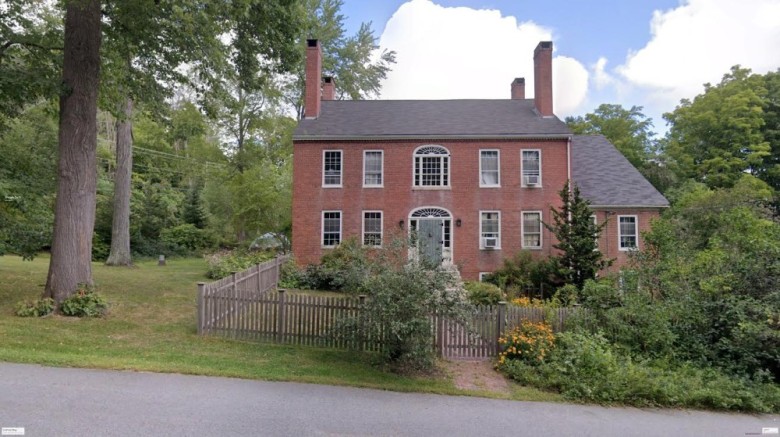
In 1799 at a time when the town road was just a bridle path and towering old growth pines dominated the landscape, Thomas Vose embarked on an ambitious project. Starting with a basement built of fieldstone courtesy of the last ice age; the building was expertly erected by experienced masons four layers thick. The main ingredient; a warm red brick, bound together with soft lime mortar, molded and fired in local kilns, at the Liberty Point Brickworks just north of Mill Cove. White pine lumber, cut at the busy tide mill, would have been sawed, hand planed and nailed on site by skilled joiners and carpenters, to create doors, windows and millwork. Heavy timber floor joists and roof rafters were tied into pockets left in the masonry walls. Thick wood shingles were hand-riven (split) from "bolts" of pine, to clad the shallow hipped roof. Rosehead nails, Norfork latches and butterfly hinges; all manner of hardware, were heated and hammered, on the local blacksmith's forge.

All these tangible materials, shaped by settlers hands, survive from the earliest days of Robbinston, preserved as though in a time capsule; this venerable old building.

The traditional construction date of 1799, with a move in date of 1800, is supported by several documents. According to an entry, in the Washington County Registry of deeds; on the 23rd of September 1799, Thomas purchased from Edward H. Robbins, 100 acres “with all the appendances thereon.” He paid three hundred thirty-three dollars and thirty-three cents

"Appendances" could suggest existing buildings on the property. A timeline for spring and summer, roughly 6 to 7 months at a minimum, would be necessary to finish the project by September. He likely began the project sometime before he purchased the property, and moved in before it was completed. It is also recorded that Thomas sold the old farm on Brush Hill to his uncle, Ebenezer Vose, in 1799, potentially providing an influx of cash to finance the new building.

The only hitch in the time frame is the 15 lights of colored glass in the fan window over the central front door. Some have said represented the fifteen states that existed at the time the home was built. In 1799 there were 16 states in the union with Tennessee added on June 1, 1796.

The following spring, Thomas embarked on his celebrated shipbuilding career. His grandson, Peter Ebenezer Vose tells the story; During the next year (1800) he commenced to build the first vessel in town, sending to St. Andrews for his master workman Caleb Stetson. Abel Brooks of St Andrews was the blacksmith. Both of these men afterward settled in Robbinston and brought up large families.

Shortly after the building of this vessel, which Mr. Vose named the First Attempt, he built the Second Attempt - a large brig, Rubicon and the schooner, Boston. They were all built under the direction of Mr. Stetson. About 1818 Mr. Vose built a large vessel, Mr. Stetson builder, named Goliath. Soon after this Mr. Briggs having become the son-in-law of Mr. Vose, the two built vessels together, Mr. Briggs superintending. First, came the brig Vermont for Wooster Tuttle, then the Gen, Brewer 90 tons and the Maine about 200 tons.

Messrs. Vose & Briggs built at Robbinston: The Ora, 200; Motion, 200; Mary Eliza, 62 tons; Jack Downing, 70 tons; Wanderer, 165 tons, and Hanford, 180. They also built on the St. Andrews side of the river Brig Bee, 200 tons for Ker, Douglas & Campbell; Ship St. Andrews, 450 tons, George Gorden, 540 tons and the William Henry, 140 ton, for Donaldson, St John; Louisa, 400 tons, Robert Ker. 600 tons and the Barque Garland, 300 tons, for Ker. Douglas and Campbell; Mary Strang, 200 tons, for Capt. Scott; Ship Arcadia, 600 tons for Capt. Brass; Lady Dunmore, 360 tons for Capt. Lacky; Sloop Thistle and Hannah. Most of these vessels were built on St. Andrews Island.

                                                                                 ***

Thomas Vose has been described as a man of discernment and judgement in matters pertaining to town and state. He was one of the leading businessmen of the region. He was one of the petitioners for the incorporation of the town in 1810; a member of the convention which framed the constitution of the state of Maine when set apart from Massachusetts; a selectman of the town and active in all town affairs He kept his interest in politics and town affairs until his death in 1848. The day before he died, he walked to church, a third of a mile, and back, in the forenoon and afternoon.

(click photo to view larger image)

(comments = 0)


leave a comment

display name:
email address: (not published)
your website: (optional)
comment:
(maximum 100 words)
anti-spam check:
 

All comments are subject to review. Although we review entries frequently, it may be several days before a comment is published.

fineartistmade blog
A journal about home design, gardening, art & all things Maine. Read more...